
Updated on:12/21/2025 04:31 PM 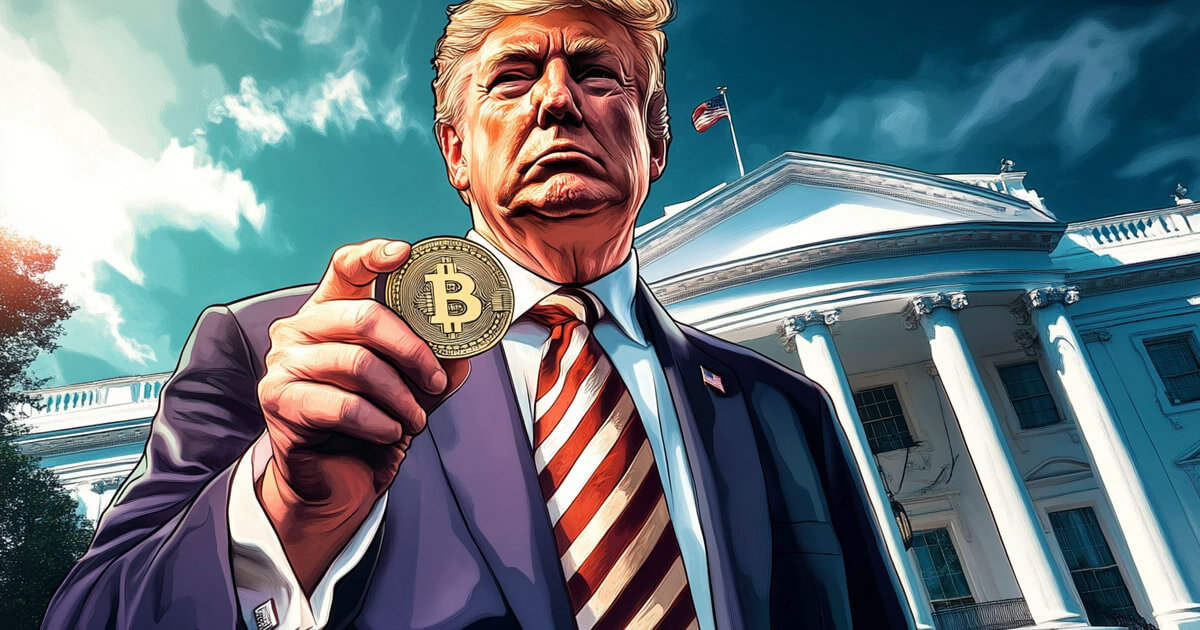
The following is a guest article from Jesse Knutson, Head of Operations at Bitfinex Securities.
With Bitcoin's value rapidly approaching $100,000, two powerful forces are driving this remarkable surge: the anticipated return of Donald Trump to the presidency and the unprecedented success of Bitcoin ETFs earlier this year. This convergence has ignited speculation about a transformative new era for cryptocurrency adoption across the United States and globally.
Recent market momentum demonstrates growing confidence that a second Trump administration could establish America as the world's leading cryptocurrency hub. This potential shift, combined with traditional financial services industries embracing digital asset growth, has created extraordinary momentum for the entire cryptocurrency ecosystem.
Although specific policy details remain forthcoming, the significant presence of Bitcoin advocates within Trump's inner circle—including Elon Musk as head of D.O.G.E.—indicates his campaign promises regarding cryptocurrency may indeed become reality. A more supportive approach to banking regulations, self-custody solutions, and digital assets could trigger transformative effects worldwide. Just as Bitcoin ETFs helped normalize cryptocurrency among institutional investors, explicit government backing could potentially shift global governmental perspectives on digital assets.
A crypto-friendly administration would almost certainly drive prices higher and encourage other nations to follow America's lead. In my previous discussions with traditional finance stakeholders—institutional investors, regulators, and policymakers—I deliberately avoided discussing Bitcoin's ultimate potential. Suddenly, however, scenarios like hyperbitcoinization and intensified hash wars seem increasingly plausible.
The implications for early cryptocurrency adopters like El Salvador or countries exploring Bitcoin adoption like Argentina remain uncertain. On one hand, as the IMF's largest contributor and shareholder, a more accommodating U.S. stance on Bitcoin might lead the organization to reconsider its opposition to El Salvador's 2021 Bitcoin legislation. On the other hand, such a shift could diminish the competitive advantage smaller economies currently seek by leveraging cryptocurrency to attract human and financial capital.
Capital markets present a particularly compelling opportunity. The potential to develop Bitcoin-based capital markets appears especially advantageous for small to mid-sized economies. Bitfinex Securities, for instance, operates from El Salvador and Kazakhstan's Astana International Financial Center rather than traditional financial hubs like New York, London, or Singapore. These jurisdictions not only enjoy strong governmental support but also feature financial sectors representing smaller portions of their GDP, reducing barriers from entrenched players in established markets. This strategic positioning offers significant potential with limited downside risks.
Current tokenization initiatives in major financial centers and by large institutions appear superficial—what some might call "token tokenization." For example, UBS Asset Management recently launched a USD Money Market Investment Fund on Ethereum, claiming to "open the door to the world of decentralized finance" while simultaneously restricting access to authorized distribution partners. This approach seems fundamentally contradictory, with centralized controls undermining the core principles of decentralized finance.
Major banks have developed proprietary tokenization technologies like HSBC's Orion and UBS's Tokenize. Most of these systems limit participation to institutional or accredited investors, settle in fiat or central bank digital currencies (CBDCs), lack integration with Bitcoin or Tether, and maintain traditional capital market intermediaries without meaningful disintermediation. Despite technological innovation, these solutions preserve the existing financial structure rather than transforming it.
This creates a strategic opportunity for nations like El Salvador to pioneer alternative approaches: streamlining capital markets, eliminating technologically unnecessary intermediaries, supporting self-custody, enabling peer-to-peer trading between verified participants, and facilitating connections between traditional and digital asset markets through Bitcoin and Tether. Such innovations could yield financial systems that are more direct, cost-effective, rapid, and inclusive than conventional capital markets.
Wall Street's tokenization strategy appears focused narrowly on operational efficiencies while overlooking opportunities to democratize market participation, restore investor control, or expand access to capital markets. Their approach seems primarily motivated by cost reduction and margin improvement rather than systemic transformation.
Regardless of Trump's cryptocurrency strategy, major markets burdened by established interests and legacy systems seem unlikely to adopt the El Salvador model of tokenization. These institutions appear to desire innovation without fundamental change.
In the coming years, we may witness a competitive race between different tokenization approaches, potentially accelerated by a more cryptocurrency-friendly U.S. administration. This contest could pit developed against developing economies, open-source against permissioned blockchain systems, inclusive participation against institutional exclusivity, and Bitcoin-based solutions against CBDC and fiat alternatives. While it's too early to predict which approach will prevail, more open, affordable, and efficient markets appear well-positioned to emerge as the preferred path forward.
