
Updated on:12/05/2025 05:18 PM 
The legendary P2P platform LimeWire, once synonymous with digital file sharing in the early 2000s, has made a remarkable comeback as an innovative NFT marketplace. The reimagined brand is now capturing attention in the web3 gaming sphere while generating excitement for its upcoming LMWR token public sale.
This immersive browser-based gaming experience transports users back to the digital era of dial-up connections and MSN Messenger, offering a nostalgic trip down memory lane for millennials worldwide. Though sharing no direct connection to the original LimeWire beyond its iconic domain name, the new leadership team has masterfully tapped into collective nostalgia.
The interactive game creates a virtual time capsule of early 2000s digital culture, guiding players through a digital museum of teenage experiences when peer-to-peer networks first revolutionized how we discovered and shared content. This clever marketing strategy bridges the gap between internet history and the current blockchain revolution.
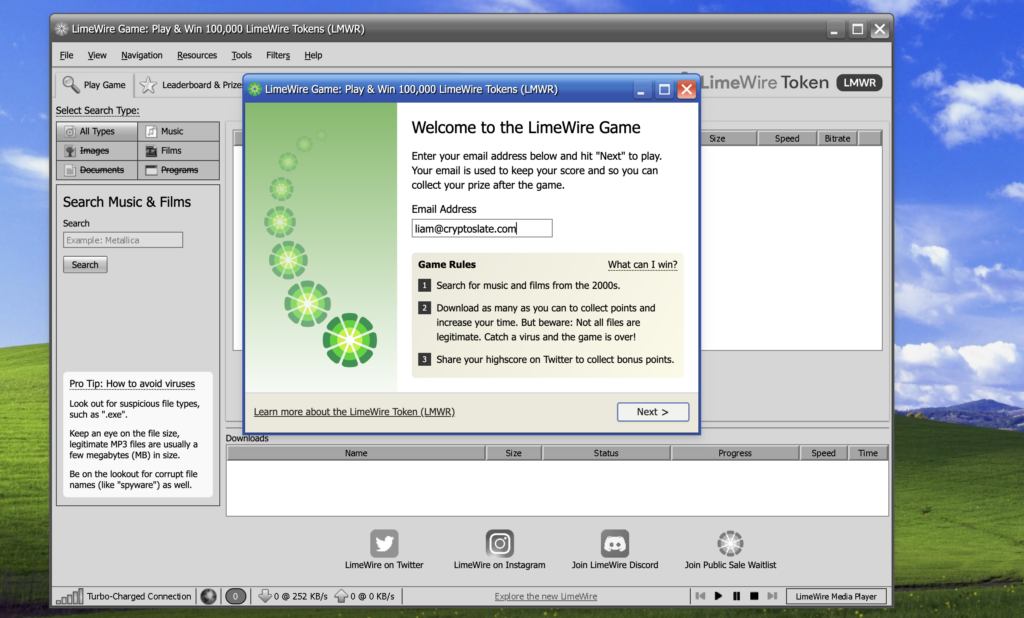
The game faithfully recreates the iconic LimeWire interface within a Windows 95 desktop environment, challenging players to download as many files as possible while avoiding simulated viruses. This retro gaming experience serves as both entertainment and a clever promotion for the LMWR token ecosystem.
Players can search for iconic bands from the era and attempt to download their tracks until the system detects a "virus" and ends the game. In my initial attempt, I scored 170 points while searching for "Green Day" tracks—a challenging test of both nostalgia and strategy.

While clearly a promotional tool for the upcoming LMWR token sale, this interactive experience demonstrates how marketing in the crypto space can combine entertainment with education. The designers clearly understand their target demographic, establishing clear parallels between the file-sharing revolution of the early 2000s and today's blockchain movement.
For many cryptocurrency enthusiasts, Bitcoin wasn't our first encounter with peer-to-peer networks. Instead, we cut our teeth sharing music through platforms like LimeWire, spending countless nights downloading single albums while hoping for complete downloads. We fondly remember discovering complete discographies of obscure bands, rare live recordings, and the frustration of files stuck at 97.9% completion due to leechers.
University campuses often hosted their own LimeWire networks, with students sharing files across local intranets. While these activities later revealed legal complications, they represented our first experiences with decentralized sharing—foreshadowing the blockchain revolution to come.
The peer-to-peer sharing boom proved short-lived when Lime Wire LLC received a court order in October 2010 to cease all file-sharing activities following lawsuits from major record labels. Interestingly, Bitcoin had emerged just the year before in 2009, quickly becoming the next grassroots network for those navigating the internet's evolving digital landscape.
With peer-to-peer networks once again gaining popularity in the crypto sphere, seeing the LimeWire name return to the digital realm feels particularly timely. While it's unfortunate that original creator Mark Gorton isn't involved in this new venture, the interactive game successfully stirs memories while highlighting our long-standing enthusiasm for decentralized technologies.
Disclaimer: LimeWire is an advertising partner of CryptoSlate, but this is not a sponsored post; our editorial team chose to cover this news organically.
