
Updated on:12/04/2025 04:22 PM 
OpenSea, the premier NFT trading platform, revealed through a social media announcement on February 17th a strategic decision to temporarily eliminate all marketplace fees, intensifying its competitive stance against the zero-fee marketplace Blur.
The platform attributed this policy transformation to the increasingly aggressive competition landscape within the NFT sector.
“The NFT ecosystem has undergone a fundamental transformation,” stated the platform in its official communication.
Additionally, OpenSea announced revisions to its marketplace blacklist, now permitting transactions on NFT platforms with comparable fee structures, including Blur, which previously faced restrictions.
The rivalry between OpenSea and Blur has escalated significantly following Blur's native token launch earlier this week.
Currently positioned at #117 on CoinMarketCap's cryptocurrency rankings, BLUR demonstrates substantial trading activity with $509 million in 24-hour volume. The token experienced notable depreciation from its February 14th launch price of $5.00, now trading approximately at the $1 mark.
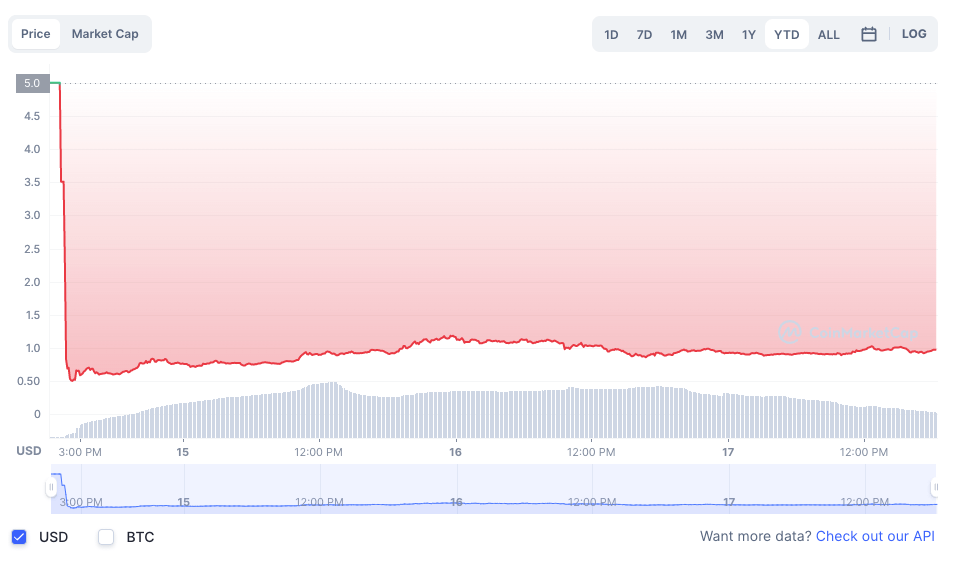
Post-airdrop, the token swiftly achieved $500 million in trading volume, highlighting immediate market interest.
February 15th marked a milestone when Blur surpassed OpenSea in trading volume for the first time since its October inception.
Despite this daily setback, OpenSea maintained superior weekly performance, with Nansen data indicating 36,608 ETH in weekly volume compared to Blur's 11,424 ETH. Between February 7-14, OpenSea consistently outperformed Blur with approximately 8.37 times more transactions and a similar margin in active wallet counts. However, the competitive gap has noticeably narrowed, reaching its smallest margin on Wednesday.
On that particular day, OpenSea recorded 19,908 total sales, merely 1.63 times Blur's 12,185 transactions. A parallel pattern emerges in active wallet statistics, with the difference now reduced to twofold, signaling the increasingly fierce competition between these leading NFT marketplaces.
On Wednesday, Blur released a creator-focused blog post detailing the royalty payment disparities between platforms and encouraging users to blocklist OpenSea to ensure creators receive complete royalty compensation.
The royalty debate has created significant tension between the platforms. OpenSea had previously implemented a strict royalty enforcement tool in November, a position they have since reversed despite strong opposition from digital artists who rely on these royalties as their primary income source in the Web3 economy.
While royalties were initially celebrated as a revolutionary benefit for NFT creators, promoting blockchain adoption among artists, their sustainability faces growing challenges. The current market trend toward fee elimination threatens this foundational value proposition.
“Currently, approximately 80% of ecosystem volume fails to provide full creator compensation, with the majority of activity shifting toward zero-fee environments,” acknowledged OpenSea in their recent update.

