
Updated on:12/28/2025 05:31 PM 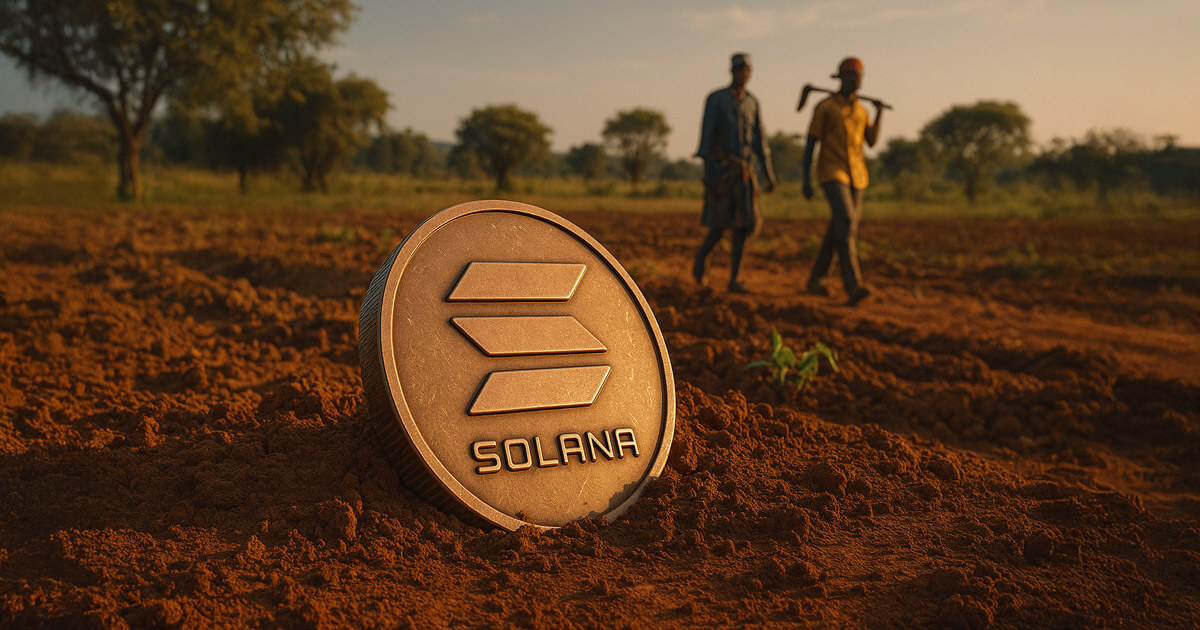
The Central African Republic (CAR) is making headlines with its ambitious plan to tokenize over 1,700 hectares of land using the Solana blockchain, marking a potentially groundbreaking chapter in blockchain real estate development. This initiative, however, has become entangled with a highly contentious memecoin, questions about governance transparency, and allegations of deceptive practices.
What began as a visionary state-led "crypto-powered development" strategy has evolved into one of 2024's most perplexing blockchain narratives, capturing global attention from cryptocurrency enthusiasts and skeptics alike.
At the heart of this controversy lies the CAR memecoin, launched on Pump.fun in February and promoted by CAR President Faustin-Archange Touadéra as a symbol of national unity and economic rejuvenation. The token debuted with an elaborate video allegedly featuring President Touadéra himself, presenting an audacious vision: harnessing the viral nature of memecoins to generate tangible real-world impact.
Yet, doubts emerged almost immediately. The promotional account faced suspension within 48 hours of launch. Persian-language cryptocurrency publications suggested the promotional video might be AI-generated. Meanwhile, blockchain investigators like Coffeezilla highlighted that over 76% of the token supply is concentrated in just four wallets, raising significant concerns about distribution fairness.
Further investigation revealed the project's website was registered merely days before its official launch. No official government decree or publicly documented legal foundation has materialized since the announcement.
Essentially, the nation's latest cryptocurrency venture is unfolding amidst a cloud of viral content and unverified claims, leaving many in the blockchain community questioning its legitimacy.
As of current market data, the CAR token trades at $0.056, reflecting a 32% decline in the past 24 hours but maintaining a remarkable 300% monthly increase. With a market capitalization of approximately $56 million and a total supply nearing 1 billion tokens, the project has experienced substantial retracement from its February peak when it briefly reached a $500 million valuation—equivalent to nearly 20% of CAR's entire GDP.
The 24-hour trading volume stands at $1.28 million, with a fully diluted valuation hovering around $56.4 million. Government officials have designated this memecoin as the exclusive medium for purchasing tokenized land plots scheduled for release on June 21.
The targeted land parcels, totaling 1,700 hectares located west of Bangui near Bossongo village, will be offered as NFTs on the Solana blockchain. However, critical implementation details remain sparse, with no confirmed user interface, published smart contracts, or disclosed integration with land registry systems.
Theoretically, CAR's land tokenization initiative could represent a significant advancement in sovereign-level blockchain applications. The sale references the country's 2023 Natural-Resource Tokenization Law and Mining Code, suggesting potential connections to valuable mineral rights. If implemented transparently, this would mark the first instance of a government selling real-world land parcels using a blockchain-native asset on a public ledger.
Nevertheless, the absence of comprehensive legal documentation, regulatory frameworks, and ministerial oversight casts doubt on the legitimacy of this land sale. No domestic or international regulatory bodies have validated the offering. This initiative echoes CAR's previous cryptocurrency endeavors, such as the 2023 "Sango Coin" (a Bitcoin sidechain project), which similarly began with ambitious promises but ultimately concluded without meaningful implementation.
The entire project has been advanced primarily through President Touadéra's verified X account (@FA_Touadera), which published the initial launch video and subsequent development updates. One post promised to allocate $50,000 worth of $CAR proceeds to renovate a local school, though no wallet transactions or expenditure records have been made public to verify this commitment.
The official token website offers limited information, with numerous sections still marked as "coming soon." As of June 7, President Touadéra posted updates about the initiative, though concrete implementation details remain conspicuously absent.
Currently, there is no confirmed institutional custodian for the token's treasury, no published framework for land claim adjudication, and no public mechanism for dispute resolution. Despite these gaps, the narrative continues to evolve, shaped by presidential announcements, market volatility, and online discourse within the crypto community.
Skepticism is growing among blockchain analysts, who note striking parallels between $CAR and other controversial memecoins, including TRUMP, in terms of launch structure and insider wallet concentration. Deepfake detection technologies have flagged the original announcement video as "likely synthetic" in origin.
Despite these concerns, Solana's technical role remains confirmed: all trading activity occurs through Solana-based decentralized exchanges, and the token/NFT infrastructure is being developed natively on the network. For Solana, this represents an unusual achievement—either a geopolitical milestone or a potential reputational challenge.
What is evident is that the Central African Republic's latest cryptocurrency initiative has transcended novelty status. It has emerged as a live case study in memecoin monetization, the intersection of cryptocurrency and geopolitics in frontier markets, and the current limitations of Web3 legitimacy.
The upcoming tokenized land sale will serve as a critical assessment. If authentic land parcels are sold transparently with funds directed toward local development, CAR could help establish a new paradigm for state-backed real-world assets (RWAs) on blockchain.
Conversely, if the sale fails to materialize or, worse, reveals an orchestrated exit strategy, the project may enter cryptocurrency history as one of the most audacious "official" experiments that straddles the boundary between genuine innovation and potential deception.
This initiative is not CAR's first exploration of cryptocurrency technologies. In 2022, the country made headlines by adopting Bitcoin as legal tender and launching "Sango Coin," a Bitcoin sidechain token intended to tokenize natural resources. That initiative ultimately failed to gain meaningful traction, hampered by governance challenges and limited international adoption.
The current approach appears to incorporate lessons from these previous setbacks by distancing itself from Bitcoin's ecosystem, emphasizing practical tokenized utility, and engaging with Solana's developer community.
Underlying this experiment is a fundamental question: can blockchain technologies offer more effective land governance frameworks in regions where traditional property registries are vulnerable to corruption, opacity, and inefficiency?
Ranked 171st out of 180 countries on Transparency International's corruption index, CAR has struggled to attract foreign investment in its mining sector, frequently accused of being influenced by armed groups and foreign mercenary organizations including the Wagner Group.
Blockchain tokenization theoretically offers revolutionary transparency through immutable records, traceable ownership, and smart-contract-enabled transactions. However, this approach also raises unresolved legal questions: Will NFT holders possess actual legal title or merely symbolic ownership claims? How will property disputes be adjudicated? What legal protections will international investors have under local or foreign jurisdictions?
As the June 21 sale approaches, the global blockchain community watches closely, recognizing that CAR's experiment could either advance the case for blockchain-based real estate solutions or serve as a cautionary tale about the challenges of implementing cryptocurrency innovations in complex political and economic environments.
