
Updated on:11/29/2025 04:59 PM 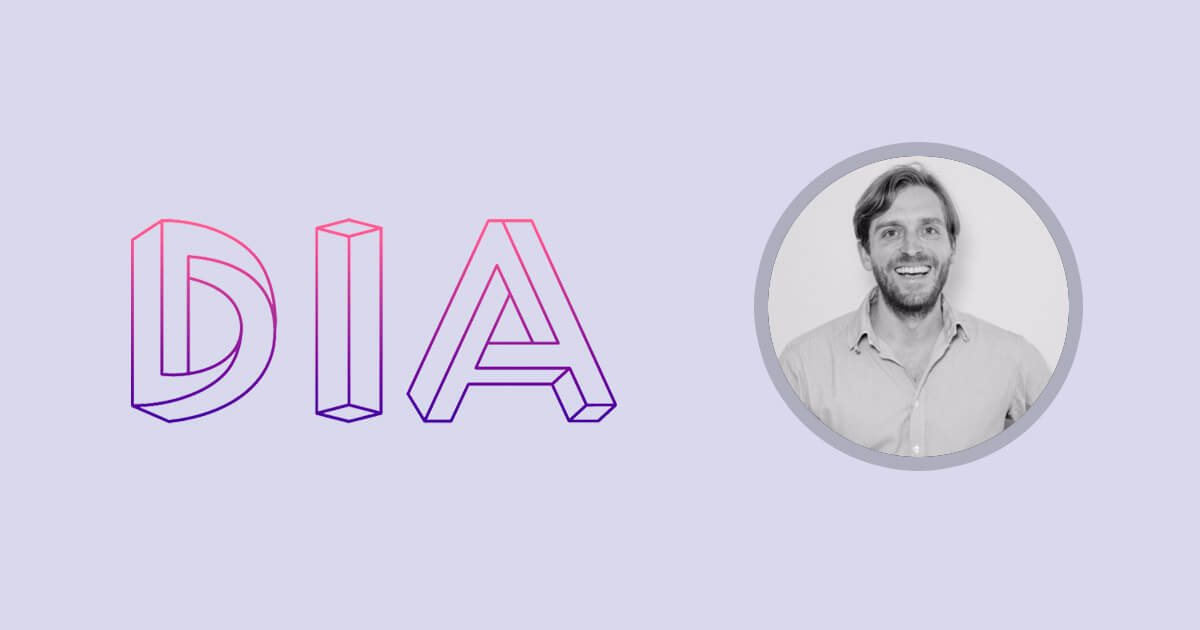
CryptoSlate recently had the opportunity to speak with Paul Claudius, the Chief Operating Officer of DIA. Paul is a blockchain enthusiast and financial markets expert. Before co-founding DIA, he served as Head of Data for the nu3 group, transforming the multi-million e-commerce platform into a vertically integrated enterprise.
Paul began his professional career as part of BNP Paribas Prime Brokerage in New York City and AXA Private Equity in Frankfurt am Main. Paul has advised and invested in numerous start-ups in health tech, IoT and e-commerce. At DIA, he oversees the business development and strategy.
This interview was featured in collaboration with the premier virtual conference BlockDown. The highly anticipated third edition of the conference, BlockDown 3.0 will take place on October 22-23 featuring some of the crypto industries' top names.
Sign up for your free ticket here.
DIA has been making headlines in the Crypto- and specifically the DeFi-space lately as a promising oracle project. Can you provide an overview of what DIA is?
With DIA, we are building a Wikipedia for market data and information. The market for financial data, both in the cryptosphere as well as the traditional financial markets is characterized by a lack of transparency, steep costs and centralized provision. Only a handful of players control the markets. We believe this can be done better for the benefit of the entire community, which is why we founded DIA with the vision of breaking down these barriers to access. DIA is a protocol that incentivizes the community-driven provision and validation of market data and information for the traditional and decentralized financial markets. DIA makes high-quality market data open-source and accessible to everyone.
We can already see several projects operating in the space. How does DIA differ from them? What is unique about your approach?
Yes, there are some great products on the market provided by projects including the likes of Chainlink and Band and others. However, being true believers in the benefits of decentralization, we were not satisfied with the available approaches to the challenges we see. The central difference between existing projects and DIA is the approach to sourcing and validating data. Given the numerous data-based attacks and glitches in the DeFi space and the huge assets lost in their wake, we designed DIA as a fully open-source protocol. We are convinced that transparency is the only way to truly guarantee trust toward the highest quality of data. This is why DIA provides a protocol and process to incentivize the community to source and maintain data.
Making data available open-source and for free seems like a forward-thinking approach. What inspired you to come up with this unique strategy?
In 2017 / 2018 we had a need for data feeds ourselves, while developing trading products and dApps. In this process, we were not easily able to find truly transparent data sources. This is when we started leveraging the power of the community to source data directly from open sources like exchanges and APIs. We soon realized that this approach, combined with a crypto-economic incentive strategy solves challenges regarding trust and scalability that no other project currently does.
How does this sourcing and validation process work? And how does DIA's governance model come into play?
Existing feeds that match the requirements of a specific dApp or product can simply be connected. All the relevant information to do so is available via DIA's documentation. For non-existing data sets, anyone can submit a data request ticket and fund it with DIA tokens. These are currently hosted on Gitcoin.com and are pushed to our developer and smart contract community who can work on these, for instance by writing exchange API scrapers. Once they are publicly submitted to our Github, anyone can earn DIA tokens if they manage to develop a better solution. The community then votes on the best solution and the bounty is rewarded to its creator. Additionally, our governance model can be used to submit and vote on governance proposals. DIA is transitioning to a full DAO as we believe that this project should be community owned and driven.
Who are you targeting with DIA? Which types of clients are you serving? How will you capture a market that seems to be already served or will you tap into new segments?
We are currently primarily focused on the rapidly growing DeFi space. As projects mature and the value locked in DeFi platforms grows, incentives for malicious actors increase and a trustworthy and auditable data source becomes more and more critical. We believe that it is essential for the market and its participants to not only rely on single oracle providers. Plurality and competition not only increases the pressure to provide the best possible solutions, but drives innovation and reduces the risk of single, centralized data provision. Additionally, we see the same issues in traditional financial markets, where transparency is a scarce commodity and the stakes are even higher.
The current DeFi hype is often being compared to the altcoin hype of 2017. Do you believe that is a fair assessment? How do you expect the space to evolve in the coming months and years?
Yes and no. Hype phases always show similar characteristics and sometimes, staggering growth numbers remind us of what happened three years ago. Similarly there are many meme projects popping up in the wave of successful projects. The fundamental difference we see is that there are many serious projects on the market developing meaningful products and showing significant resilience. We are nowhere near the levels that we aim for, which is nothing short of matching traditional financial markets. This will take time and we expect to see more surges and dips in the future as jumps in adoption and maturity are made. We are optimistic that the fundamental building blocks of the ecosystem will be created. Transparency and trust are key.
Your recent token offering seems to have been a success. What would you say are the most important factors for a successful token project in 2020?
This taps into the previous question. The community has become much more critical in our view. Projects with a well-thought-out product vision, a strong interdisciplinary team, real and proven actual use cases as well as a clear and meaningful vision for future development have a natural advantage. Transparency and trust are key. The crazy hype of seemingly random, buzzword-filled whitepapers geared to websites with a slick design seems to be mostly over.
What are your plans for the near future? Are you planning any major projects or programs that you'd like to share?
Our current focus lies on integrating DIA into the market, closing strong partnerships and continuing to improve our product and growing our community. One project we are particularly excited about is DIA Labs. Off the back of our recent success, we want to accelerate the development of building blocks that fill the gaps in the data ecosystem. We do this by backing teams and individuals with guidance and effective support. More information about DIA Labs will be published in the near future on our communication channels.
Paul is a blockchain enthusiast and financial markets expert.

