
Updated on:12/19/2025 04:46 PM 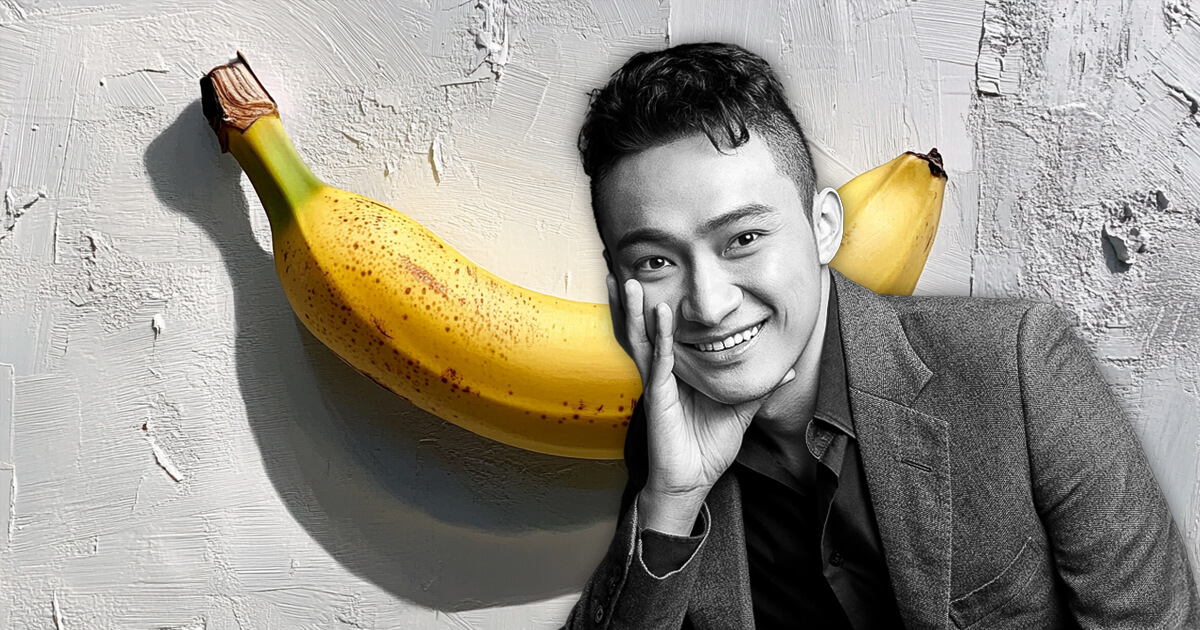
The world of cryptocurrency and digital art collided in a remarkable event when Tron founder Justin Sun consumed a banana that had been purchased for a staggering $6.2 million at Sotheby's auction house. This seemingly ordinary fruit, duct-taped to a wall, has become a symbol of the evolving relationship between traditional art, NFTs, and blockchain technology.
The extraordinary event took place at the prestigious Peninsula Hotel in Hong Kong, drawing attention from art collectors, crypto enthusiasts, and media outlets worldwide. Sun's actions were not merely about consuming a piece of fruit but making a profound statement about the nature of value in the digital age.
The artwork in question, titled "Comedian," was created by renowned Italian artist Maurizio Cattelan first gained international recognition in 2019 when it debuted at Art Basel in Miami Beach. What began as a satirical commentary on the art market has now become a focal point for discussions about NFTs, digital ownership, and the future of art valuation.
As reported by The Guardian, Sun strategically used this event to draw fascinating parallels between conceptual art, non-fungible tokens (NFTs), and blockchain technology. His actions demonstrate how the boundaries between physical and digital assets continue to blur in our increasingly connected world.
Following an eloquent speech about the intersection of art and technology, Sun took a symbolic bite of the banana, declaring it "quite good" to the assembled audience. In a thoughtful gesture, attendees received rolls of duct tape and bananas as commemorative souvenirs, extending the experience beyond the event itself.
For Sun, this artwork represents far more than mere satire—it stands as a powerful statement on the convergence of art, technology, and global culture. By consuming the banana, he transformed it from a static art object into an experience, highlighting how digital assets like NFTs can change our relationship with art and ownership.
The banana itself has an extraordinary backstory. Sourced from a humble fruit stall on Manhattan's Upper East Side, its original cost was less than a dollar. When 74-year-old vendor Shah Alam learned that the simple banana he had sold had been resold for millions of dollars, he reportedly wept with emotion at the incredible turn of events.
In a generous response to the situation, Sun pledged to purchase 100,000 bananas from Alam's stall for distribution globally. This initiative, described as a "celebration of the connection between art and everyday life," bridges the gap between high-value art transactions and ordinary commerce. However, as the New York Times reported, Alam clarified that selling bananas is not a profitable venture for him, adding another layer to this fascinating story.
Justin Sun's actions come at a time when the NFT market is experiencing unprecedented growth and transformation. By linking this physical artwork to broader conversations about digital ownership, he has highlighted several important trends in the crypto art space:
As the boundaries between physical and digital continue to dissolve, events like Sun's banana consumption challenge us to reconsider what gives objects value in our increasingly digital world. Whether viewed as performance art, a marketing stunt, or a philosophical statement, this incident has undeniably advanced the conversation about art, technology, and the future of ownership.
