
Updated on:11/30/2025 02:43 PM 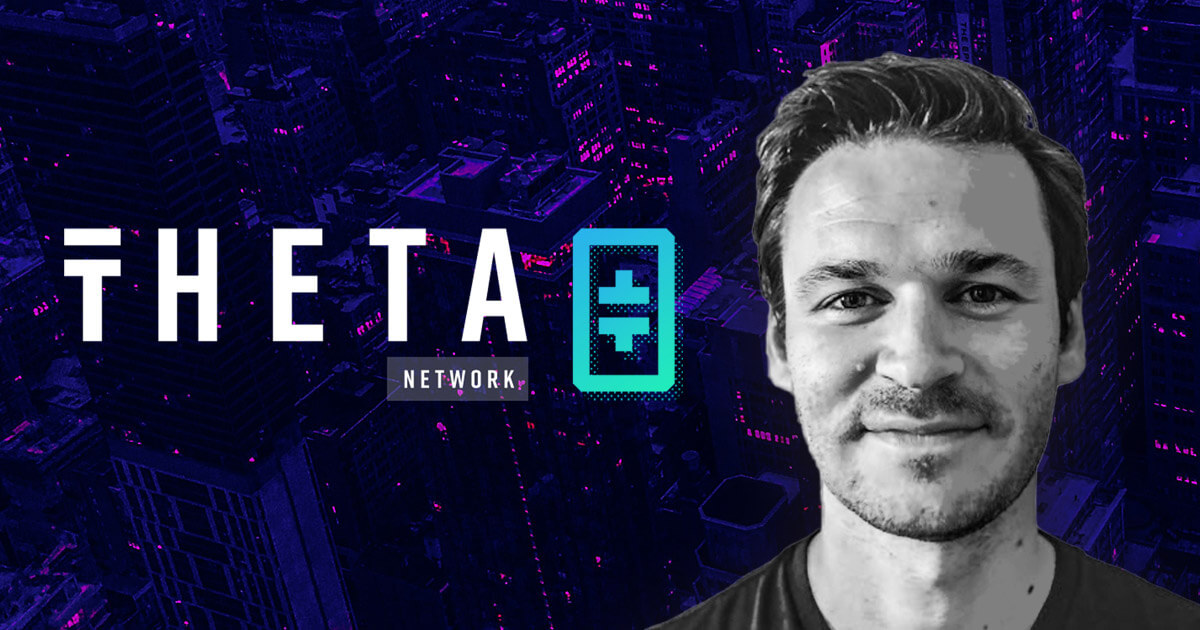
CryptoSlate had the exclusive opportunity to sit down with Wes Levitt, the Head of Strategy at Theta Labs. Theta is pioneering a more efficient, decentralized infrastructure engineered for delivering video and other data streams across a global network of connected devices.
Wes Levitt serves as the Head of Strategy for Theta Labs, where he orchestrates corporate strategy, spearheads marketing and public relations, and drives data analytics. He is a recognized speaker on blockchain technology, having presented at major conferences like the New York Media Festival, Blockchain Expo, and the NAB Streaming Show. Before joining Theta Labs, Wes spent eight years in investment roles within real estate equity and securitized debt. He holds a BS in Economics from the University of Oregon and an MBA from the UC-Berkeley Haas School of Business.
What is the professional background of Theta's founders and their prior experience in the crypto space?
Theta CEO Mitch Liu has an extensive background in media and entertainment. He co-founded Gameview Studios, best known for its Tap Pets mobile game franchise with nearly 100 million downloads. The company was acquired by DeNA, a leading Japanese mobile gaming company, just 6 months after launch. Prior to that, he co-founded Tapjoy in 2007, a pioneer in rewarded social and mobile video advertising, scaling that company to $100 million in revenues.
He earned a BS in Computer Science & Engineering from Stanford University, conducted his thesis research at the Stanford Media Lab "Interactive TV" video group, and received an MBA from Stanford Graduate School of Business.
CTO Jieyi Long leads the Theta Labs technical team and has developed numerous U.S. patented technologies related to decentralized data delivery and live VR streaming. Before Theta Labs, he held senior technical positions at MadSkill Game Studios, Synopsys, and Magma Design Automation. He received a B.S. degree in Microelectronics from Peking University in Beijing, China. He also holds a PhD degree in Electrical Engineering from Northwestern University in Evanston, IL, where he conducted research in mathematical modeling and algorithms for simulating distributed electronics systems.
What problems is Theta solving?
Theta is creating a more efficient, decentralized network for delivering video and other data between connected devices. This reduces the cost of delivery for video platforms and improves their bottom line. The introduction of token rewards for end users also drives higher user engagement, longer watch times, and more recurring visits, all contributing to greater market share.
How many people are working on Theta, and where is the team based?
There are currently 25 people at Theta Labs, primarily based in the San Jose / Bay Area, with satellite offices in Seoul and Amsterdam.
Beyond digital collectibles, what is Theta's long-term vision for NFTs? What new use cases will emerge that haven't been implemented yet?
We see a huge opportunity in connecting NFTs with real-world items and events. Some of the crypto streamers already releasing NFTs on Theta are tying their NFTs to one-of-a-kind experiences and offline physical items, which will be announced soon.
Also, with the easing of Covid restrictions, we are very excited about the return of live events and how NFTs can revolutionize ticketing—a significant improvement because NFT-linked tickets are easily transferable yet are verifiably authentic and secure.
What is the strategic advantage of partnering with Sony Innovation Fund?
Sony Innovation Fund was an early investor in Theta Labs, so we have been discussing potential collaborations for some time. As Sony Innovation Fund's R&D Lab began focusing on blockchain technology, it made sense to work together to enhance the security and consensus of the Theta blockchain with the launch of their Theta Validator Node.
What does the Lionsgate and Cinedigm partnership mean for the future of Theta?
It's critical that major brands and enterprises gain experience in the blockchain space, and these partnerships are often their first steps. As Theta onboards more of these key partners, the protocol is developing a reputation as the purpose-built blockchain for media and entertainment, serving as the ideal entry point into the Web3 ecosystem for established companies.
What are some of the core advantages of the Theta blockchain? Is it building upon any existing blockchain frameworks?
Theta is primarily new code built from the ground up, though it does borrow some architectural elements from the Tendermint consensus. Building on that foundation, Theta's multi-level BFT consensus mechanism balances a massive group of 3,500+ decentralized Guardian Nodes with a smaller group of enterprise-grade Validator Nodes, run by entities like Google Cloud, Sony Innovation Fund, Samsung Next, and Blockchain Ventures. This allows for rapid consensus among the validator set without sacrificing decentralization, as transactions are finalized across the vast permissionless Guardian Node network.
Theta has also made significant advancements in ultra-high-throughput blockchain micropayments to power decentralized networks, for which it has been awarded multiple U.S. patents.
What are the challenges of building a purpose-built blockchain? How will Theta achieve widespread adoption?
One challenge is interoperability with other blockchains. Launching a new ERC20 token is relatively simple since the infrastructure is already established for Ethereum-supported tokens. For Theta, we had to build much of that infrastructure ourselves. That has taken time but is now largely complete, a process aided by the fact that Theta uses a similar architecture and is EVM-compatible. This, for example, means any Ethereum smart contract can run on the Theta blockchain without any code modifications.
What can you tell us about the Theta product roadmap? What will be the most significant upgrades in the Theta Mainnet 3.0 rollout?
The major addition for Mainnet 3.0 is the launch of Elite Edge Nodes, a stronger, more robust network of nodes to power decentralized video streams. These nodes will allow users to stake TFUEL tokens and earn additional TFUEL as a reward for high uptime and network availability. This extra incentive is crucial for driving the massive number of always-on Edge Nodes that will make the Theta Network more effective for video delivery.
What is the utility of the Theta token?
Theta Token (THETA) is the governance token of the Theta protocol. THETA is used to stake as a Validator or Guardian node, participate in block production, and the protocol governance of the Theta Network. By staking and running a node, users will earn a proportional amount of the new TFUEL generated. The supply of THETA is fixed at 1 billion and will never increase.
Theta Fuel (TFUEL) is the utility token of the Theta protocol. TFUEL is used for on-chain operations like payments to Edge Node relayers for sharing a video stream, or for deploying and interacting with smart contracts. Relayers earn TFUEL for every video stream they relay to other users on the network. You can think of Theta Fuel as the "gas" of the protocol. There were 5 billion TFUEL at the genesis of the Theta blockchain, and the supply increases annually at a fixed percentage set at the protocol level.
Where do you see the Theta ecosystem in the next few years? What will be the major milestones?
In the coming years, we see Theta evolving to serve as a decentralized delivery network for many data types. We believe there are massive opportunities in relaying game patches, OS updates, and other file types where the network characteristics are ideal for peer-to-peer networks like Theta. You have many simultaneous users downloading these files, sometimes millions at once, which is perfect for creating high peer availability for p2p networks.
