
Updated on:12/29/2025 06:43 PM 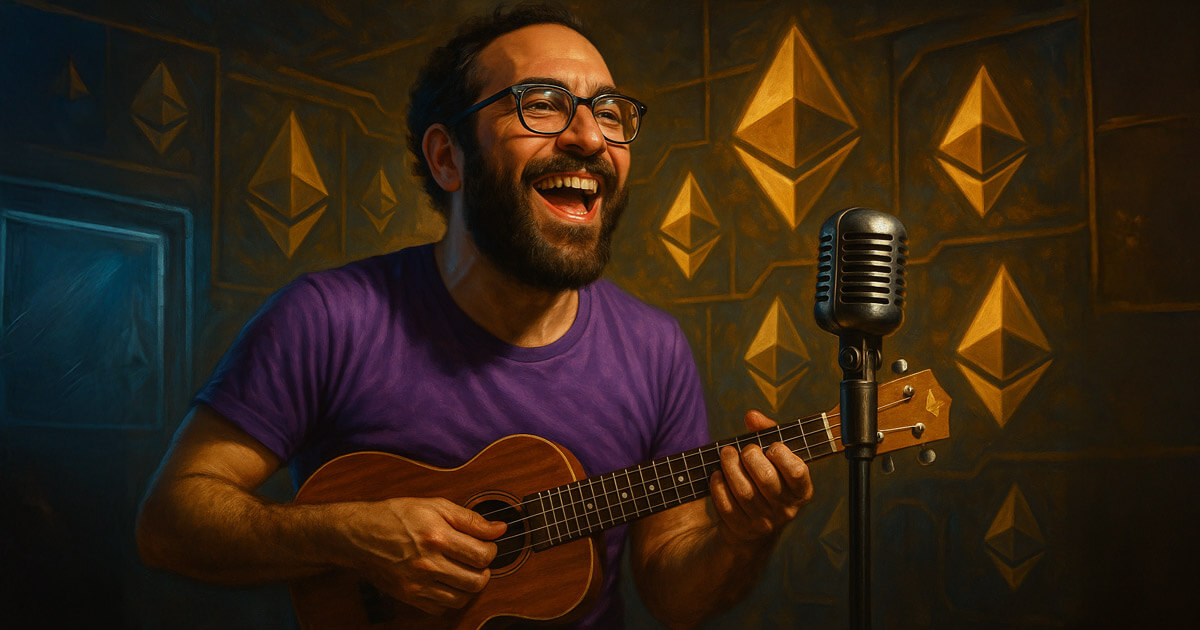
Singer-songwriter Jonathan Mann recently shared the cautionary tale of how earning millions in Ethereum (ETH) during a brief NFT sale eventually transformed into a complex tax situation that every digital creator should understand.
For 17 years, Mann has maintained an impressive streak of publishing one song daily, reaching his 6,000th composition on June 5—a track ironically documenting the financial challenges that followed his NFT success.
In 2022, the digital artist sold 4,000 songs—representing 13 years of creative work—within just 60 minutes, accumulating approximately $3 million in Ethereum. Unlike many NFT sellers, Mann chose to hold his earnings in cryptocurrency rather than converting to traditional fiat currency, a decision that would later prove significant.
The U.S. Internal Revenue Service (IRS) treats cryptocurrency earnings from NFT sales as ordinary income at the moment of receipt, creating a critical tax implications of NFT sales for musicians that caught Mann unexpectedly. Despite his assets' subsequent depreciation, he remained liable for taxes based on the initial $3 million valuation.
Adding to his tax obligations for digital artists, Mann had previously accumulated $1 million in 2021 tax liabilities from earlier NFT mints and airdrops, including Ethereum Name Service (ENS) and ConstitutionDAO tokens. To address these obligations, he secured a $400,000 loan through the Aave lending platform, collateralized with 518 ETH—a decision that would soon be tested by market volatility.
The May 2022 collapse of the Terra ecosystem devastated Mann's financial position, reducing his collateral's value from $1.5 million to approximately $200,000. This forced a last-minute repayment that left him with only 163 ETH and a net capital loss of roughly $1.3 million, demonstrating the risks of managing crypto volatility when selling NFTs.
Throughout 2023 and 2024, IRS notices continued to accumulate, citing nearly $1.1 million in unpaid income tax and threatening asset seizure. Mann recounted feeling overwhelmed as he faced the prospect of liquidating his prized "autoglyph" collection to settle his tax debt.
Ultimately, the autoglyph sale offset his borrowing losses and helped clear his tax obligations, providing a temporary resolution to his cryptocurrency tax obligations for digital artists dilemma.
Sharing his hard-earned wisdom, Mann now advises fellow creators to implement a converting NFT proceeds to USD tax strategy. He specifically recommends using protocols like 0xSplits to automatically convert a portion of NFT earnings into stablecoins such as USDC, effectively matching revenue with prospective tax liabilities while reducing exposure to price swings.
His experience serves as a critical lesson about IRS treatment of cryptocurrency earnings from NFTs, highlighting the importance of financial planning in the volatile world of digital assets.
