
Updated on:12/01/2025 05:00 PM 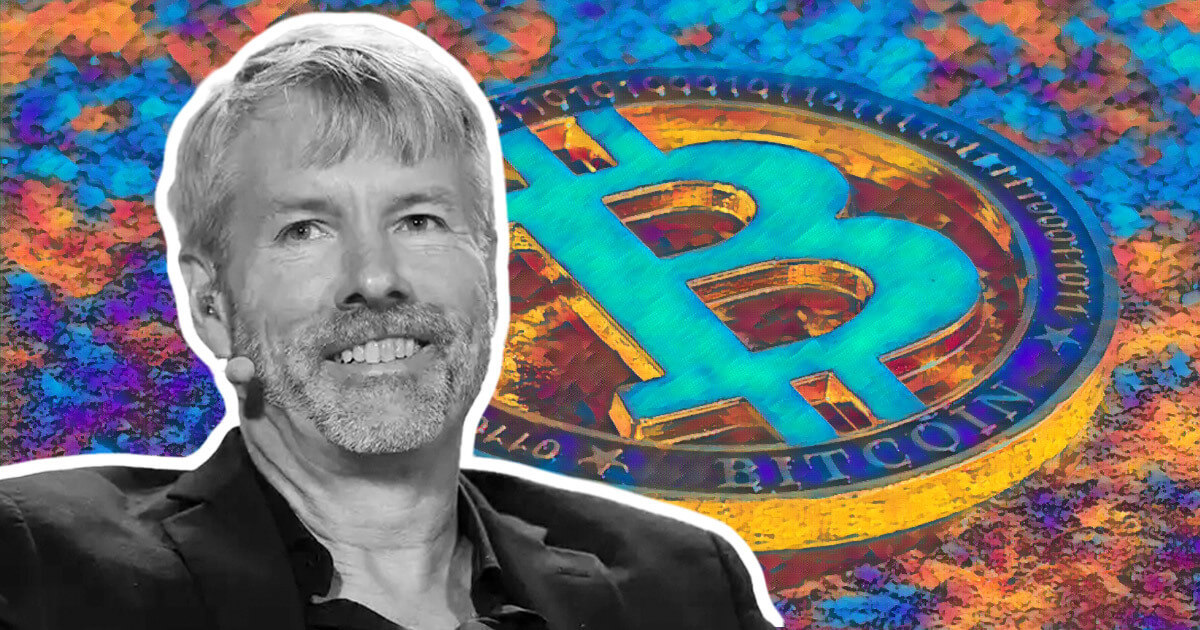
Speaking on the PBD Podcast, Michael Saylor, CEO of MicroStrategy, has put forward a bold thesis: Bitcoin should be classified not as a commodity or a security, but as the world's only true scarcity asset. This distinction places him at odds with U.S. financial regulators currently vying for control over the cryptocurrency market.
The Commodity Futures Trading Commission (CFTC) and the Securities and Exchange Commission (SEC) have been locked in a jurisdictional battle over who should wield authority over the burgeoning crypto sector in the United States. Both agencies are arguing that crypto, and Bitcoin in particular, falls under their purview—either as a commodity or a security—competing for dominance of the multi-trillion dollar asset class.
Saylor explains how the pandemic prompted a fundamental re-evaluation of his understanding of money and corporate treasury strategy for wealth preservation. Citing the massive increase in money printing globally since 2020, Saylor argues that the real-world value of fiat currency has significantly depreciated.
He interprets the stock market rally of 2020-2021 not as genuine growth, but as the collapse of fiat currency's value in real-time against scarce assets. With 30% of all U.S. dollars in circulation having been printed after May 2020, Saylor posits that any holder of cash has effectively lost a substantial portion of its purchasing power in recent years.
The M1 money supply saw an initial surge at the pandemic's onset. From May 2020 to May 2021, it grew by 18%, followed by an additional 7.2% increase in the subsequent nine months. For Saylor, this data, combined with rising inflation, is clear evidence that holding cash is a guaranteed loss of value.
If currency value is destined to decrease, Saylor contends he has a fiduciary duty to his shareholders to migrate the company's treasury into a superior asset class. In his search for a truly scarce asset, he explored investments in real estate, stocks, bonds, and even art before committing to Bitcoin.
Stocks, he notes, are not scarce; "if the stock is overvalued relative to the company's fundamentals, the CEO is almost certainly going to issue more stock." While prime real estate in major cities like New York or London might be scarce, Saylor points out its vulnerabilities. "The government can collapse the value of your property income," he warns, citing the potential for new property taxes or rent controls.
Ultimately, Saylor says he was looking for a form of property that wasn't constrained by geography or susceptible to government interference. That's when he discovered Bitcoin.
He makes a powerful point about the nature of Bitcoin ownership and the security provided by private keys.
"Every other form of property in the history of the human race... if I pull the gun, I get it all. Right, my incentive is to violence. With Bitcoin, if I pull the trigger, I get none of it."
There will only ever be 21 million Bitcoin in existence, which Saylor describes as "digital skyscrapers." These assets cannot be seized from you without your consent and are permanently finite in supply.
Bitcoin, he claims, is the very definition of scarcity—the only genuinely scarce asset in the world. All money, he argues, is a derivative of energy—"social energy, political energy." Whether created through mining, services, or land, energy must be expended. This is also true of Bitcoin, but in a more direct and transparent way. Technology has evolved to allow for the purest, most efficient form of storing energy through the Bitcoin network.
Furthermore, Bitcoin is liquid; owners can transfer it globally in minutes. Unlike other forms of energy storage, your holding is always a perfect representation of its value, because its supply cannot be inflated.
"Scarcity is something of which it is absolutely capped. If the price goes up by a factor of a thousand or a million, it is absolutely capped. That is not the case with gold, soybeans, silver, oil, stocks, bonds, real estate, single-family homes, ships, planes, trains—nothing else."
Therefore, if Bitcoin represents a novel asset class intrinsic to blockchain technology, Saylor argues it cannot logically be classified as a traditional commodity or security. This view, however, is met with a mixed and complex response from the SEC and CFTC.
In 2018, the SEC, under then-Chair Jay Clayton, was willing to concede that Bitcoin was not a security. However, it maintained that tokens offering a return, such as those in DeFi, should be regulated as securities. Clayton proclaimed:
"To the extent that digital assets like [initial coin offerings, or ICOs] are securities—and I believe every ICO I have seen is a security—we have jurisdiction, and our federal securities laws apply."
Today, however, SEC Chair Gary Gensler has shifted focus to crypto exchanges, DeFi protocols, and stablecoins, arguing they should all fall under the SEC's regulatory umbrella. He has even suggested that stablecoins could pose a risk to U.S. national security.
Gensler, who previously taught a course on blockchain and finance at MIT, has stated that "these stablecoins also may be securities and investment companies," firmly positioning them for SEC oversight.
The debate continues. Last year, CFTC Commissioner Brian Quintenz reinforced his agency's stance, stating:
"Just so we're all clear here, the SEC has no authority over pure commodities or their trading venues, whether those commodities are wheat, gold, oil... or crypto assets."
More recently, in testimony before the U.S. Senate Committee on Agriculture, Nutrition, and Forestry, CFTC Chair Rostin Behnam laid the groundwork for the future of crypto regulation. He staked the CFTC's claim to the "cash digital asset commodity market" while remaining silent on yield-generating assets like DeFi tokens and stablecoins.
He praised inter-agency collaboration, potentially paving the way for the SEC to regulate DeFi while leaving the CFTC with 'pure commodity' cryptocurrencies like Bitcoin.
"The digital asset industry in the U.S. does not fall under a single, comprehensive regulatory regime. Instead, the CFTC, other federal agencies, and state regulators have all been responsible for collectively establishing the existing, and very fractured, regulatory landscape."
A commodity is a fungible basic good or raw material, interchangeable with other goods of the same type (like gold or oil). In contrast, a security is a tradable financial asset, such as a stock or bond, which represents an ownership position or a creditor relationship. The U.S. Supreme Court uses the Howey Test to define a security, focusing on whether it involves an investment of money in a common enterprise with an expectation of profits derived from the efforts of others.
Applying these definitions to crypto is challenging. Some DeFi instruments with smart contracts and yield generation could easily be classified as securities under the Howey Test. NFTs, due to their non-fungible nature, may escape both classifications. Saylor, a Bitcoin maximalist, might agree with Gensler's view on many DeFi assets, having previously called Ethereum a digital security.
However, his view on Bitcoin stands in stark contrast to the positions of both the SEC and the CFTC. To Saylor, Bitcoin is a unicorn; nothing in the world can compare.
He argues that any cryptocurrency launched without an ICO or pre-mine shares the same monetary properties as Bitcoin. A fork could create a new version, potentially increasing the effective supply. This raises questions: Is Bitcoin truly fungible if its forks can be traded? These complexities make the blockchain space so fascinating. We are navigating a new world of digital monetary technology, and while no one has all the answers yet, discussions like those led by Michael Saylor are crucial to finding a path forward.
