
Updated on:12/26/2025 06:47 PM 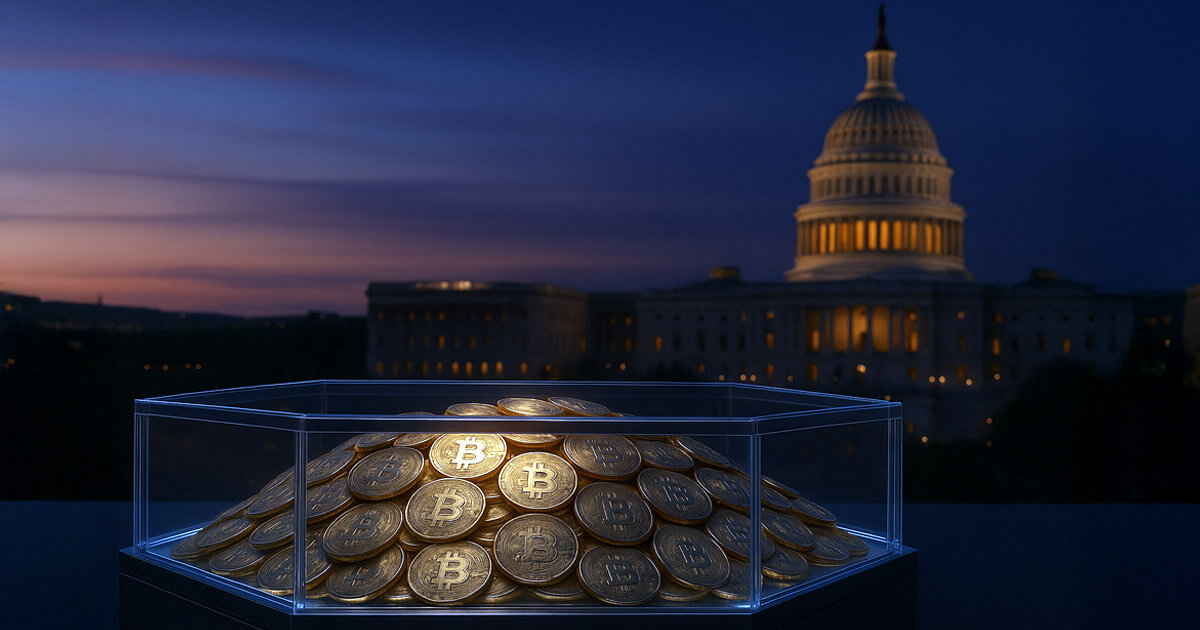
Over a decade ago, dedicated Bitcoin enthusiasts implored development teams to implement a "censorship fork" targeting cryptocurrency holdings in a US government wallet obtained from the Silk Road marketplace. Their concerns centered on potential market manipulation through massive sell-offs or worse, the federal government exercising undue monetary influence over the digital asset ecosystem.
However, in a dramatic policy shift announced last March, the White House officially designated these previously confiscated digital assets as the foundation of a new Strategic Bitcoin Reserve. This transformation from community-outcast to national treasure represents one of the most significant evolutions in cryptocurrency-government relations.
Between 2014 and 2023, the US Marshals Service conducted a series of auctions liquidating approximately 195,000 BTC at remarkably depressed valuations totaling just $366 million. Calculated against current market prices exceeding $105,000 per Bitcoin, this portfolio would now represent over $20.4 billion in value. Senator Cynthia Lummis has characterized this lost opportunity as "deeply troubling," with some estimates suggesting the actual unrealized gains surpass $21 billion when measured against Bitcoin's historical price peaks.
The initial disposal in 2014 saw 29,657 Bitcoin confiscated from Silk Road wallets auctioned for approximately $18.7 million—coins now valued at $3.1 billion. Each subsequent release constituted a progressively smaller fraction of Bitcoin's expanding market capitalization, with a 9,861-coin transfer in 2023 barely registering price impact.
While the Department of Justice received authorization to liquidate 69,370 seized Bitcoin in January, recent executive intervention following the presidential transition has apparently delayed this planned sale.
Since October 2013, blockchain explorers have enabled public monitoring of the FBI's growing repository of illicit cryptocurrency. Online forums including BitcoinTalk and GitHub hosted heated discussions proposing protocol modifications to freeze or blacklist the government-controlled address. Core development teams rejected these proposals, maintaining that selective enforcement would irreparably damage the network's integrity and warning that blacklisting seized assets would violate Bitcoin's fundamental neutrality principle declining to implement such changes.
This established a crucial precedent: technical governance would remain independent of political influence, requiring governmental entities to pursue objectives through established legal and market mechanisms rather than protocol manipulation.
The recent presidential directive instructs the Treasury Department and Department of Justice to consolidate approximately 198,000 BTC remaining under federal control, holding these digital assets "to enhance national resilience and preserve fiscal flexibility."
Administration officials position the reserve as a strategic commodity comparable to gold reserves, while congressional supporters emphasize first-mover advantage in an emerging sovereign cryptocurrency competition. The United Kingdom reportedly maintains approximately 61,000 Bitcoin from ransomware recoveries, China possesses 194,000 BTC, and El Salvador's governmental holdings now exceed 6,000 coins.
Market analysis indicates that recent government sales have produced minimal price disruption. The strategic reserve represents less than one percent of Bitcoin's circulating supply, with daily trading volumes comfortably absorbing significantly larger transactions. Contemporary market dynamics respond more to policy signals than wallet movements—speculation regarding potential forced liquidation recently caused a three percent price dip during after-hours trading.
For long-term cryptocurrency participants, this evolution represents both irony and validation. The network successfully maintained its decentralized principles, avoided contentious protocol splits, and transformed the governmental entity that previously engaged in distressed asset sales into a strategic accumulator.
However, fundamental questions remain regarding alignment with Bitcoin's original vision. When the issuer of the world's primary reserve currency simultaneously controls substantial cryptocurrency reserves, potential conflicts of interest merit examination.
The path toward Bitcoin's widespread adoption may ultimately necessitate direct confrontation between traditional financial systems and cryptocurrency ecosystems. Can Bitcoin supporters reasonably expect consistent government alignment with cryptocurrency principles?
Currently, the 'Strategic Bitcoin Reserve' framework exclusively incorporates assets obtained through law enforcement actions, with no provisions for market acquisitions. Notably, the current administration's business interests include memecoins, stablecoins, and alternative cryptocurrency platforms beyond Bitcoin, suggesting rhetorical support without equivalent prioritization of Bitcoin-specific initiatives.
The fundamental principle of "don't trust, verify" remains paramount—particularly given the limited evidence demonstrating substantive benefits to Bitcoin's fundamental value proposition or technological advancement from government-held digital assets.
