
Updated on:12/16/2025 04:33 PM 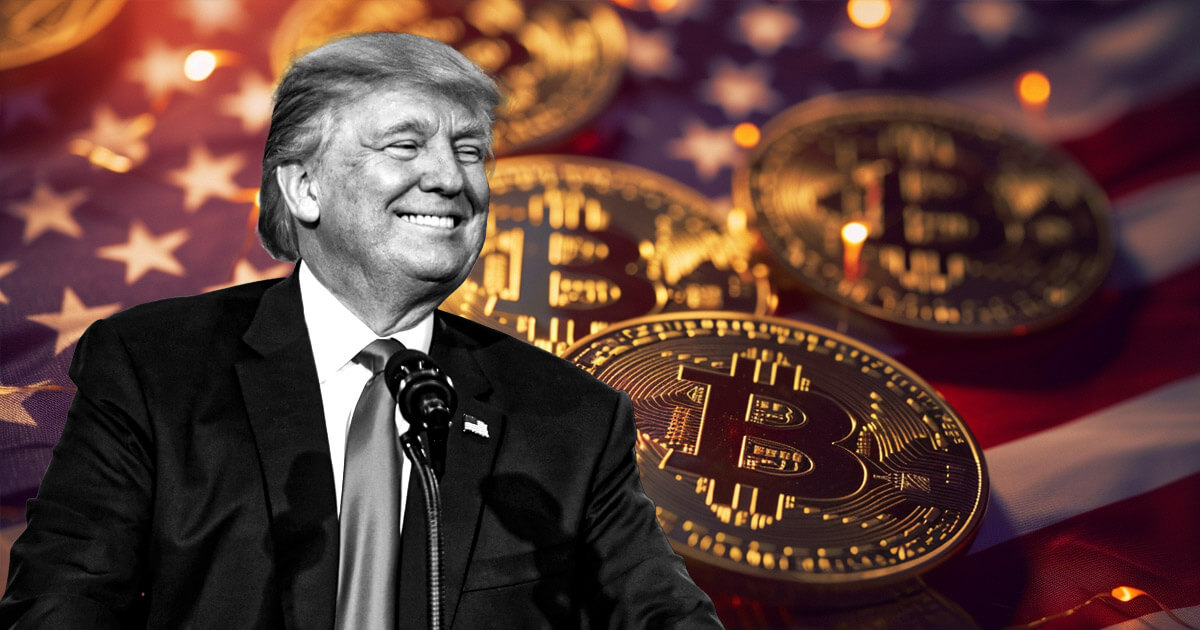
Former President and Republican presidential nominee Donald Trump has strongly endorsed Bitcoin and the broader cryptocurrency ecosystem during a recent conversation with prominent live streamer Adin Ross on August 5th. The interview marked a significant moment in political discourse surrounding digital assets.
During the engaging discussion, Trump reinforced his previous declarations made at the prestigious Bitcoin2024 conference, emphasizing that the United States must actively encourage innovation within the rapidly evolving digital asset sector. This stance signals a potential shift in governmental approach toward cryptocurrency technologies.
Addressing recent market speculation, Trump explicitly stated that the federal government should refrain from liquidating its cryptocurrency holdings, a position that has provided reassurance to crypto market participants concerned about potential large-scale sell-offs.
The timing of these remarks coincides with a noteworthy transaction from the previous week, when blockchain analytics from Arkham Intelligence identified a $2 billion Bitcoin transfer from a wallet associated with the US government to an unidentified entity. This movement has sparked various interpretations across the financial landscape.
Market observers remain divided on the implications of these transfers. While some speculate that government officials might be preparing to offload their Bitcoin reserves, potentially exacerbating market volatility during a period of economic uncertainty, others suggest these movements could be operational transfers related to the US Marshals Service's recent selection of Coinbase as a custodian for these digital assets.
Trump articulated his perspective on the strategic importance of digital currencies, positioning crypto as a "very modern currency" with transformative potential comparable to revolutionary technologies like artificial intelligence. His vision suggests recognizing cryptocurrency as a fundamental component of future economic infrastructure.
The former president argued that America must assume a pioneering role in the cryptocurrency domain or risk ceding technological and economic advantages to competitive nations such as China. Additionally, Trump voiced criticism toward the current administration's apparent antagonism toward cryptocurrency adoption and questioned the rationale behind recent large-scale governmental transfers of digital assets.
Trump's comprehensive crypto perspective emerges amid intensifying national discussions regarding the appropriate role of digital assets within the US economic framework. Notably, Trump has proposed the innovative concept of allocating a portion of the government's Bitcoin holdings toward reducing the national debt, which currently exceeds $35 trillion.
The former president suggested that Bitcoin's potential appreciation relative to the US dollar could gradually shift wealth from traditional fiat systems into more secure digital stores of value, potentially reshaping long-term economic structures.
In related developments, Senator Cynthia Lummis has introduced forward-thinking legislation proposing mandatory annual Bitcoin acquisitions by the US government, potentially reaching 200,000 Bitcoin each year over the subsequent five years. This legislative initiative underscores the increasing political recognition of cryptocurrency's strategic importance in national economic planning.
At the time of reporting, Bitcoin was trading at approximately $54,144, reflecting a 6.84% decline over the preceding 24-hour period, according to market data from CryptoSlate. Despite this short-term fluctuation, the underlying fundamentals and institutional interest in Bitcoin continue to evolve.
