
Updated on:12/12/2025 05:20 PM 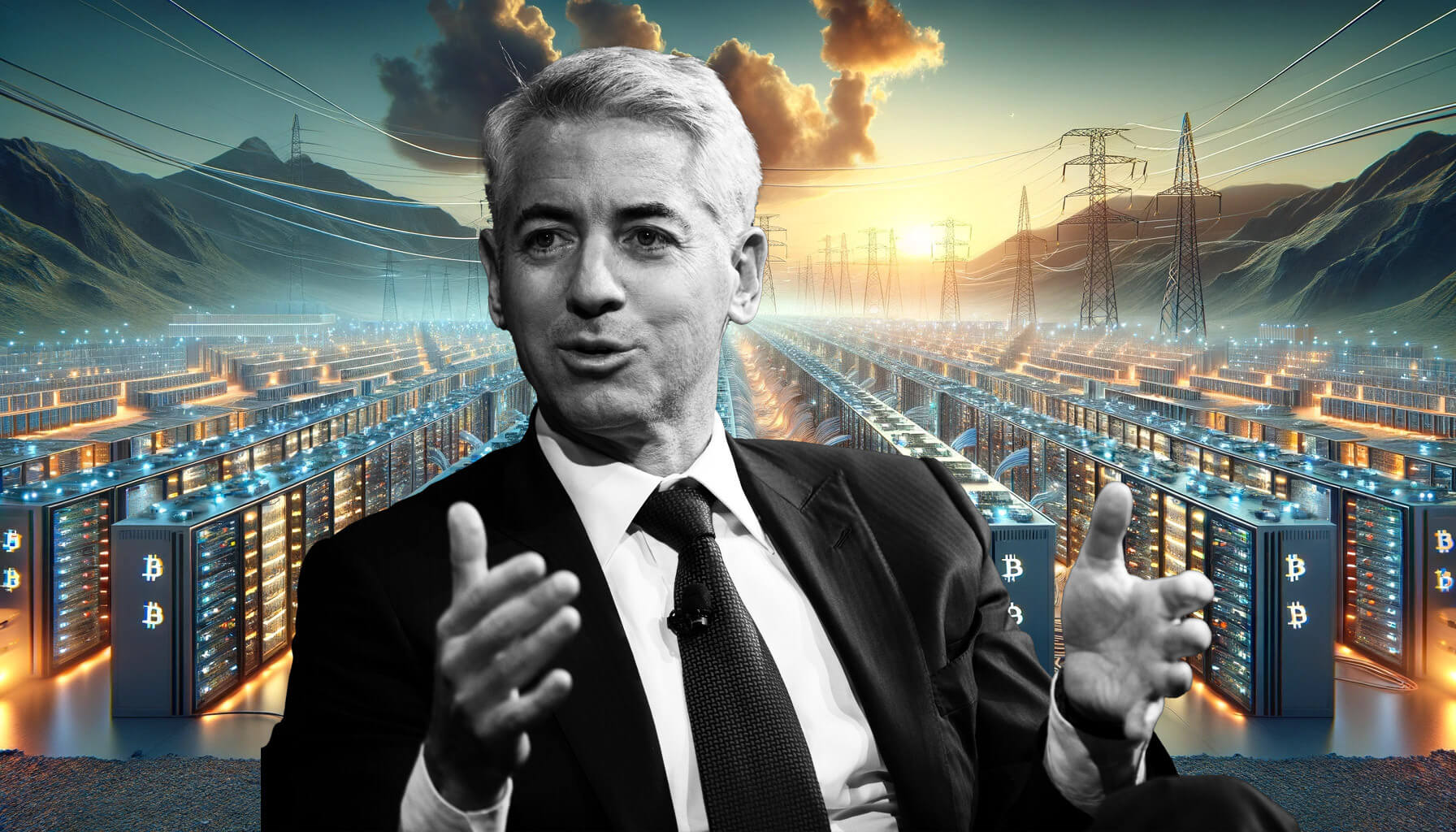
Renowned investor and Pershing Square Capital Management CEO Bill Ackman recently ignited a comprehensive discourse within the cryptocurrency community, drawing attention to critical questions about Bitcoin's environmental sustainability and energy consumption patterns. His theoretical framework has catalyzed widespread debate among crypto advocates, economic analysts, and environmental specialists.
Ackman's observations encompassed several pivotal aspects, including the long-term viability of Bitcoin's mining operations, the potential ramifications for worldwide energy demands, and the broader economic implications of increasing cryptocurrency integration into financial systems.
The renowned investor's social media contributions emphasized the complex relationship between Bitcoin's value proposition and its energy requirements, suggesting a scenario where significant price fluctuations could influence mining economics.
Ackman's theoretical framework elicited diverse reactions, ranging from defensive counterarguments to calls for a more sophisticated understanding of Bitcoin's energy ecosystem. The discourse gained additional momentum when commentators highlighted Bitcoin mining's substantial energy footprint, comparing it to the entire consumption of a nation like Greece.
Critics contend that Bitcoin's energy consumption represents an undeniable environmental challenge with significant ecological consequences. Conversely, supporters suggest that skeptics should engage more deeply with cryptocurrency communities to comprehend the intricate dynamics of mining operations and their potential contributions to energy sector innovation.
Industry experts, including prominent Bitcoin advocate Michael Saylor, have contributed valuable insights to the ongoing energy debate.
Saylor expanded on the discussion by proposing that Bitcoin mining could actually facilitate more sophisticated energy solutions and accelerate renewable energy adoption through creating demand for cost-effective, sustainable power sources.
Alexander Leishman countered by emphasizing the inherently competitive nature of Bitcoin mining, suggesting that the industry's pursuit of profitability naturally leads to utilizing more affordable, frequently renewable, energy resources.
This perspective challenges conventional wisdom that Bitcoin mining intensifies demand for traditional energy sources, instead positioning it as a potential catalyst for energy efficiency and sustainability advancements.
Troy Cross argued that Bitcoin's valuation increases don't necessarily correlate with higher energy expenditures, pointing to the increasing sophistication of mining technologies and the strategic geographical distribution of mining operations worldwide.
Meanwhile, environmental advocate Alex Gladstein reinforced the argument that Bitcoin mining primarily taps into surplus or renewable energy sources. His position strengthened the notion that the Bitcoin mining sector contributes to optimizing the global energy mix rather than depleting it.
Industry voices such as Hunter Horsley and Muneeb Ali envision a future where the Bitcoin network's energy requirements could potentially diminish. They emphasized how blockchain halving events and eventual reliance on transaction fees will reduce incentives for energy-intensive mining operations.
A compelling metaphor characterizes Bitcoin's ecosystem as a "self-regulating organism" governed by precise mathematical principles that contribute to economic stability. This viewpoint illustrates the inherent predictability and systemic resilience of Bitcoin, distinguishing it from traditional financial instruments.
By framing cryptocurrencies as self-regulating organisms, proponents highlight the robustness, adaptability, and innovative potential of these systems. They suggest that, similar to living organisms, these technologies possess the capacity to evolve and self-correct in response to challenges, ensuring their continued relevance in an ever-changing technological landscape.
