
Updated on:12/03/2025 04:22 PM 
The metaverse has emerged as a transformative force in the digital landscape, with global awareness skyrocketing from 32% in July 2021 to an impressive 74% by March 2022, representing a remarkable 131% increase in just seven months, according to comprehensive consumer data analysis by Wunderman Thompson Intelligence.
Despite growing concerns about privacy and safety—particularly for children navigating these virtual worlds—a significant majority of consumers surveyed recognize the metaverse as not just a technological trend but 'the future' of digital interaction. This paradigm shift in how people perceive virtual spaces has profound implications for cryptocurrency integration and blockchain development.
The research, which gathered insights from 3,005 participants aged 16 to 65 across the United States, United Kingdom, and China, reveals that metaverse awareness transcends geographical boundaries, creating unprecedented opportunities for digital asset investment and virtual economy expansion.
What's particularly striking is the high adoption rates among consumers familiar with the metaverse concept. A compelling 74% of these participants believe virtual worlds represent 'the future,' while 72% identify it as 'the next big thing.' Additionally, 68% view the metaverse as 'the next internet,' and 66% describe it as 'life-changing,' indicating a fundamental shift in how people envision digital interactions.
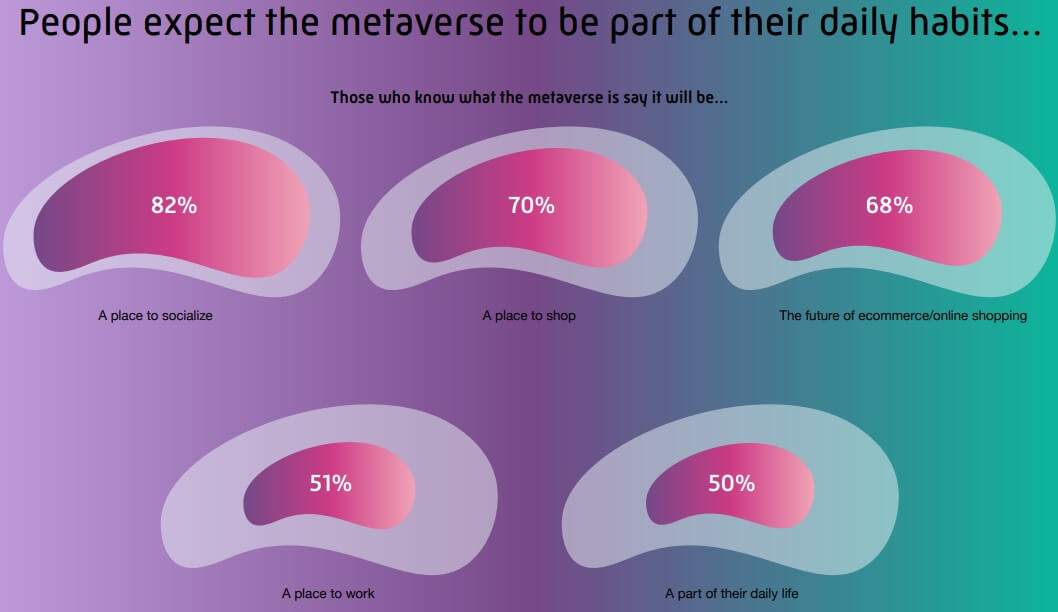
Looking ahead, 82% of metaverse-aware consumers predict it will become a primary socialization platform, with significant potential for shopping and professional activities. This evolution creates fertile ground for metaverse cryptocurrency adoption and blockchain-based virtual economies to flourish.
Survey results indicate that the metaverse is transitioning from passive digital engagement to active consumption and creation, particularly as blockchain technology enables secure digital ownership and transactions. Notably, 60% of metaverse-familiar participants believe brands should develop and sell digital products alongside physical offerings, opening new revenue streams in the virtual economy.
As participants increasingly view the metaverse as a social platform, 76% expressed a desire for their avatars to embody creativity beyond physical world limitations. This digital self-expression represents a fundamental shift in identity interaction, with 51% finding it easier to be their authentic selves in virtual environments—a phenomenon that could revolutionize social dynamics in blockchain-powered spaces.
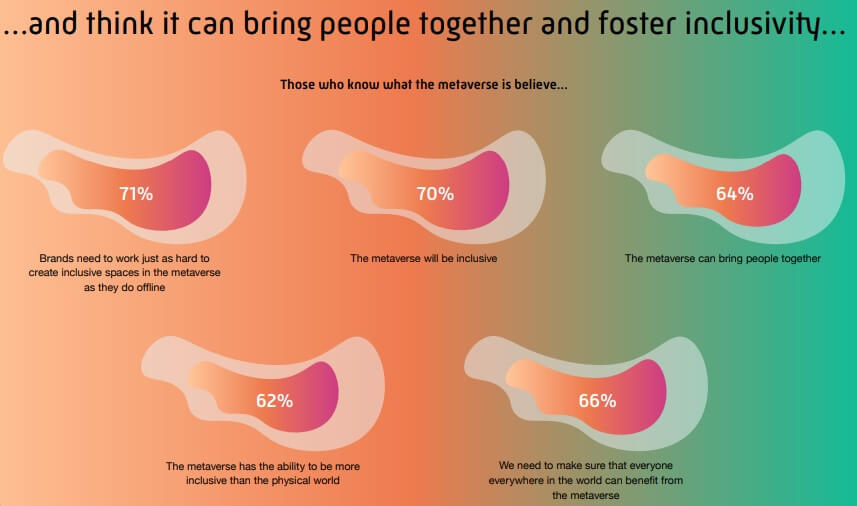
Participants emphasized the inclusive potential of the metaverse, with most believing virtual worlds can unite people across geographical and cultural divides. However, both brands and users expressed the need to ensure these digital spaces remain accessible and welcoming to all populations—a principle that should guide the development of metaverse cryptocurrency systems and blockchain infrastructure.
Despite enthusiastic adoption rates, significant concerns persist regarding safety and privacy in virtual environments. Among metaverse-aware participants, 72% expressed worries about children's privacy in digital spaces, while 66% voiced safety concerns. Additionally, 57% reported fears about potential bullying experiences, both for themselves and their children.
Data protection remains a paramount issue, with 69% of participants expressing concerns about personal privacy and data security—highlighting the critical need for robust blockchain security measures and transparent data governance frameworks in metaverse development.
