
Updated on:11/27/2025 07:05 PM 
CryptoSlate had the opportunity to speak with Grant Blaisdell, the founder and CEO of Copernic Space, a marketplace for "digital space assets and companies."
Grant has been building ventures at the intersection of emerging technologies and media in the US and Central Europe since his late teens. An early pioneer in applying blockchain technology to various industries, companies Grant has co-founded include the leading Blockchain Analytics and AML company Coinfirm and the digital asset marketplace for the Space industry Copernic Space. As a long-time performer and breakdancing creator known as GB Savant, Grant also applies his creative influence to his music with upcoming projects such as Mr. Crypto.
In the interview, we discuss:
What is your background and how/when did you get into crypto?
I was in the LA press and digital media space mainly focused on organization and monetization models around digital content on mobile whether music or video. Bitcoin was already something I had heard about and had positive feelings toward based on my background and my position and value toward the world and its systems.
But I think most people have an “Aha” moment with this technology, mine was around 2013 when I realized that applying this technology in certain ways can help alleviate a major issue I was looking to solve and that was centralized 3rd party platforms and middlemen that provided bottom value. I'm coming back around to my crypto roots now as I'm becoming more and more involved in the digital media and music scene around this technology.
Tell us about why you decided to launch Coinfirm?
Really what sits at the core of Coinfirm is providing the bridge between crypto and the data economy and democratizing the AML market from high cost and low knowledge to a highly effective near automated system that a small startup to a major financial institution can use to properly address their compliance needs for blockchain assets. We saw where we thought crypto was going and understood that for it to reach the point of mass adoption that it would have to cross the regulatory challenge and more specifically the AML aspect.
On the flip side, our founding CEO and FEDERATION have a deep background in AML, anti-fraud, and related analytics aspects and we understood that not only can we provide the AML bridge connecting crypto to the market but totally add the realities and knowledge of AML overall. We took it from a high cost 2% effective process in the traditional finance business and turned that into an easy to use near automated solution that works in 90 percentiles.
With our blockchain agnostic framework, meaning the capability to technically combine and analyze across blockchains, and a combination of some other competitive advantages we were quickly able to position ourselves as an AML and analytics sector leader. Though we were very early and one of if not the first that focused on the AML challenge, our long-term vision is continuously being proven right and we look forward to showcasing that further with our AMLT Oracle solution for DeFi and other solutions like ReclaimCrypto.
What are the biggest misconceptions about working full-time in crypto?
That it's some kind of easy get rich quick market you can just jump and sail through. I've personally never been focused on the speculative aspect but more so the solution building and application concept, so for me, I'm uniquely invested in the long run and live and die by what I create.
Though the huge growth interest in the speculative side of crypto has its obvious positives, I think what people don't see is the countless hours and incredible work being done by people all over the world in this space that is what will at the end of the day get crypto into the hands of a large portion of users whether they know it or not. I can't tell you how many people I've seen quit the "business" as they get frustrated after BTC drops for an extended period etc.
What is your biggest frustration with the industry?
Selling blockchain as the solution and not selling solutions themselves. One thing is also something that has a positive side as well, which is this kind of technological arrogance of some people, especially people that were very early. This has proliferated into the products they were pitching or selling and in my view damaged the reputation of other related players by association.
You can't say hey I'm here to kill you and then sit down and try to work with them or sell them in. These things take time. Also the speculative focus relates to the above and then places the validity of the industry on the speculative rises and falls of the assets themselves.
What is your craziest crypto horror story?
As a Co-Founder of Coinfirm I got some internal views on “crypto horror stories”. But the hacks, the open scams, etc are much more visible, the true “conman” is operating in the shadows of this industry. There's a bunch of blockchain project founders that have in total spent countless hours and time and even trips for a potential client or investor that ends up being a scam of a very high level.
I won't go into details, but just know that there are designed companies marketed as investment firms with a constant array of add but copied websites, names, and addresses in Switzerland. They consist of known con men centered between Switzerland and Italy that promise blockchain project founders they help to secure major crypto assets and then direct them to ultimately execute transactions that are fake from their end but real from yours.
Tell us about your latest venture, Copernic Space, and what problems it is aiming to solve?
Copernic Space is an NFT-based marketplace for digital space assets and companies. Copernic Space's concept starts three generations ago with my grandfather who was an aerospace academic for the national military institution in Poland. A free market competitive-minded man behind the wall of communism, he began his writings around what we would call today the “democratization” of space based on the real issue of access. The tremendous intellectual capital and idea being generated locally weren't accessible to the West and vice versa.
This torch was picked up by my mother and handed to me with the first stages of our Copernic Space concept attempt over 6 years ago. One thing I've learned through my various startup ventures, their successes, and failures, is that timing is of great importance, and at that point in time was blockchain technology not mature enough to create the features we felt were foundational for what was needed, but the readiness of the space industry itself wasn't ready for what we're attempting to do back then. Only now are these two points capable of positioning to birth a platform that serves to improve the efficiency and liquidity of the space industry as it is today, but also provide a modern digital economy foundation for the space economy and its future.
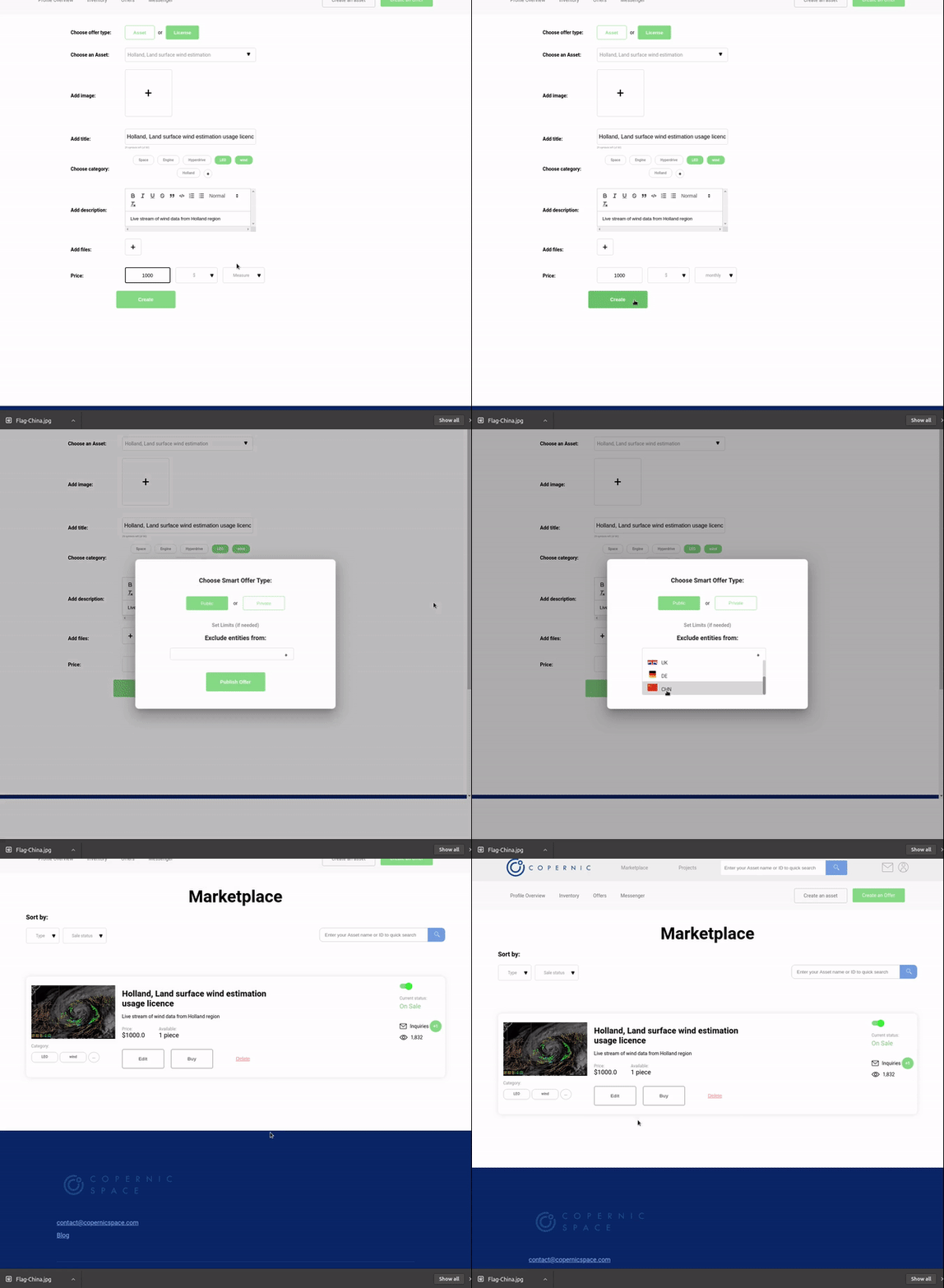
Currently, in many cases the process to discover, verify, and access satellite imagery, data, and what we call digital space assets is a complicated and fragmented process. The Copernic Space marketplace will allow for digital space assets such as satellite data, imagery, EO, and more to be easily acquired and accessed in one place, unlocking a huge and more efficient market.

Space enterprises can better manage and monetize their digital space assets while the global market benefits from an easy way to discover and access them. With our SmartFund built side by side with the Marketplace, we're providing the opportunity for projects to showcase themselves and harvest funding from the public.
The entire platform is blockchain-powered and built on a tokenized (mainly NFT) and smart contract-based system, providing a straightforward, democratized, and much more secure and efficient foundation for the space economy.
We just passed our PARTICIPANT stage and are applying a modern UI while working directly with industry partners such as satellite imagery providers on direct commercial use cases and creating the Copernic Space Data Standard, which we're building to eventually create an acceptable standard across the market and help alleviate some of the issues facing it. Along with this work, we're currently in a funding round that will take us to a public launch and lead up to full market launch.
What other projects and/or blockchain developments are you most excited about?
I originally have that background in digital media and music, and I've actually stayed involved over the years in applying blockchain tech to that direction, whether it be helping develop blockchain-based ticketing applications for the industry or something as simple as giving fans bitcoin at my concerts. So the reality is in general I'm leaning into taking digital forms of intellectual property and providing modern ways for the creators to better own, protect, and monetize them.
Rarible has shown the great potential of just a fraction of that for example, while projects like ROCKI are applying it directly to music. Though obviously there is so much uncertainty, as usual, attributed to these next 10 years, but when it comes to crypto and further blockchain development it is going to be very exciting.
Do you have any blockchain and/or crypto predictions for 2021 and beyond?
Regulations, specifically AML aspects will affect DeFi soon. The debate around if/who/how to legally pursue true DEX and DeFi like structures and apply these regulations. I don't like getting into the speculative and related forecasting things in crypto, but as we're still technically in the early stages of all of this, you are going to continue to see the ongoing success event of countless tokens, and more up and down waves around major asset pricing.
Along with that probably a few more “bitcoin is dead” articles But in general what we're seeing in this run in my opinion is pushed by institutional players and companies coming in and is more akin to the .com boom period though the ICO boom shared similarities to the .com period as well. The next run is going to be pushed by commercial implementations such as Copernic Space and many more data-market applications around digital media for example. This run might not stop anytime real soon though with that said.
What are the biggest obstacles for the mainstream adoption of crypto?
Obviously regulatory uncertainty or just plain poor execution. This is going to come in various waves, such as crypto in general, we saw it with ICOs, we're going to see it soon with DeFi. All new models are being built and their true integration into segments of the economy will take time and repeated waves. I also believe that we have to evolve what we see as the end “mainstream” adoption of crypto.
I've always thought that for the majority of people, who aren't going to be really holding or treating cryptocurrencies as major investments, will be using cryptocurrencies and most likely not even know it.
One of the major obstacles for the mainstream adoption related to that is overall user experience and the foreign idea that regular users will be messing with complex processes, private keys etc, and the products are going to start reflecting that along with more general adoption.
What is your most controversial opinion relating to blockchain and/or cryptocurrency?
Though I don't think it's technically controversial as it's general truth for today, I love ethereum and see it as the foundational power of blockchain development, but I can't trust it enough from a scalability and network level to fit what I need for real commercial applications based on it. The swings and high risk in stability and transaction costs are not something that an application that needs to provide real effective trust for companies can rely on.
Though it's kind of painful to say, Ethereum sets the foundation for our blockchain development but is not going to be the blockchain we deploy the product on.
Grant has been creating ventures at the intersection of emerging technologies and media in the US and Central Europe since his late teens.

